
PTSD Awareness Month: 8 ways to show your support

Clinically reviewed by Dr. Chris Mosunic, PhD, RD, MBA
PTSD Awareness Month helps break stigma and build support for those in need. Explore 8 ways to help raise awareness and tips to support yourself if you're dealing with PTSD.
Post-Traumatic Stress Disorder (PTSD) doesn’t always look the way popular culture suggests. It isn’t only combat veterans who experience it — in fact, there's a good chance that someone you know is quietly struggling. The colleague who avoids crowded spaces, the friend who startles easily, or the parent who struggles to sleep. PTSD is common, often invisible, and still widely misunderstood.
About 13 million adults in the US are living with PTSD in any given year, according to the National Center for PTSD, and many don't have access to the support they need. Which is why raising awareness of this condition is so important. June is PTSD Awareness Month, and it’s a time dedicated to breaking that silence and creating awareness.
Whether you're personally navigating PTSD, supporting someone who is, or simply looking to show up more thoughtfully for your community, there's something meaningful you can do this month. Here's a look at why PTSD Awareness Month matters and how you can take part.

What is PTSD Awareness Month?
PTSD Awareness Month is recognized every June in the United States. It was created to help more people understand post-traumatic stress disorder, reduce the stigma that stops people from getting help, and improve access to care and support. June 27th is also recognized as National PTSD Awareness Day.
PTSD is a mental health condition that can develop after someone goes through or witnesses a traumatic event. Trauma that can lead to PTSD includes combat, natural disasters, accidents, sexual or physical violence, sudden loss, and other deeply distressing experiences.
Symptoms can include flashbacks, nightmares, feeling on edge, emotional numbness, and avoiding reminders of the trauma. To be diagnosed, these symptoms usually need to last longer than a month and interfere with daily life.
Why is PTSD awareness month important?
PTSD Awareness Month matters for a few reasons:
It reduces stigma: PTSD is still widely misunderstood. Its symptoms are often seen as personal weakness rather than a normal response to trauma. That keeps people from reaching out for support.
It helps people feel less alone: When communities talk openly about trauma, people living with PTSD feel seen and understood. That sense of connection makes it easier to seek treatments like Cognitive Processing Therapy (CPT), Prolonged Exposure (PE), and Eye Movement Desensitization and Reprocessing (EMDR).
It drives broader change: Awareness supports advocacy for better mental health policy, more research funding, and improved access to care. Around 6% of the US population will experience PTSD at some point in their lives, with women twice as likely to develop it as men.
Read more: Why PTSD looks different in women (and may be more common)

How to participate in PTSD Awareness Month: 8 ways to show support
Even if you’ve never experienced PTSD yourself, you can still show up and support your loved ones or your community. Here are a few ways to make that happen.
1. Educate yourself
Understanding what PTSD is, and what it isn't, is one of the most powerful things you can do. The National Center for PTSD is one of the most thorough and reliable resources available. Learning about symptoms, treatment options, and who PTSD affects helps you respond to others with more compassion and less assumption.
Also, if you have people in your life who suffer from PTSD, ask if they’d be open to sharing what their experience is like so you can learn and support them better.
Related read: What is complex PTSD? Plus, 9 tips to help you heal
2. Share accurate information
Social media can spread misinformation fast, but it can also be a tool for good. This month, consider sharing facts about PTSD from credible sources using hashtags like #PTSDAwarenessMonth or #PTSDAwarenessDay. Even a single post that reaches one person who needs to see it is worth it.
3. Check in on the people around you
If you know people who have experienced trauma, but maybe aren’t so keen to talk about it, you can still check in to show you care. A simple, open-ended check-in, without pressure or expectation, can make a real difference to someone who's struggling. "How are you really doing?" is a small question that can open a big door.
💙 Press play on Calm’s Meaningful Practice for Meaningful Friendship series to support your connections.
4. Listen without trying to fix
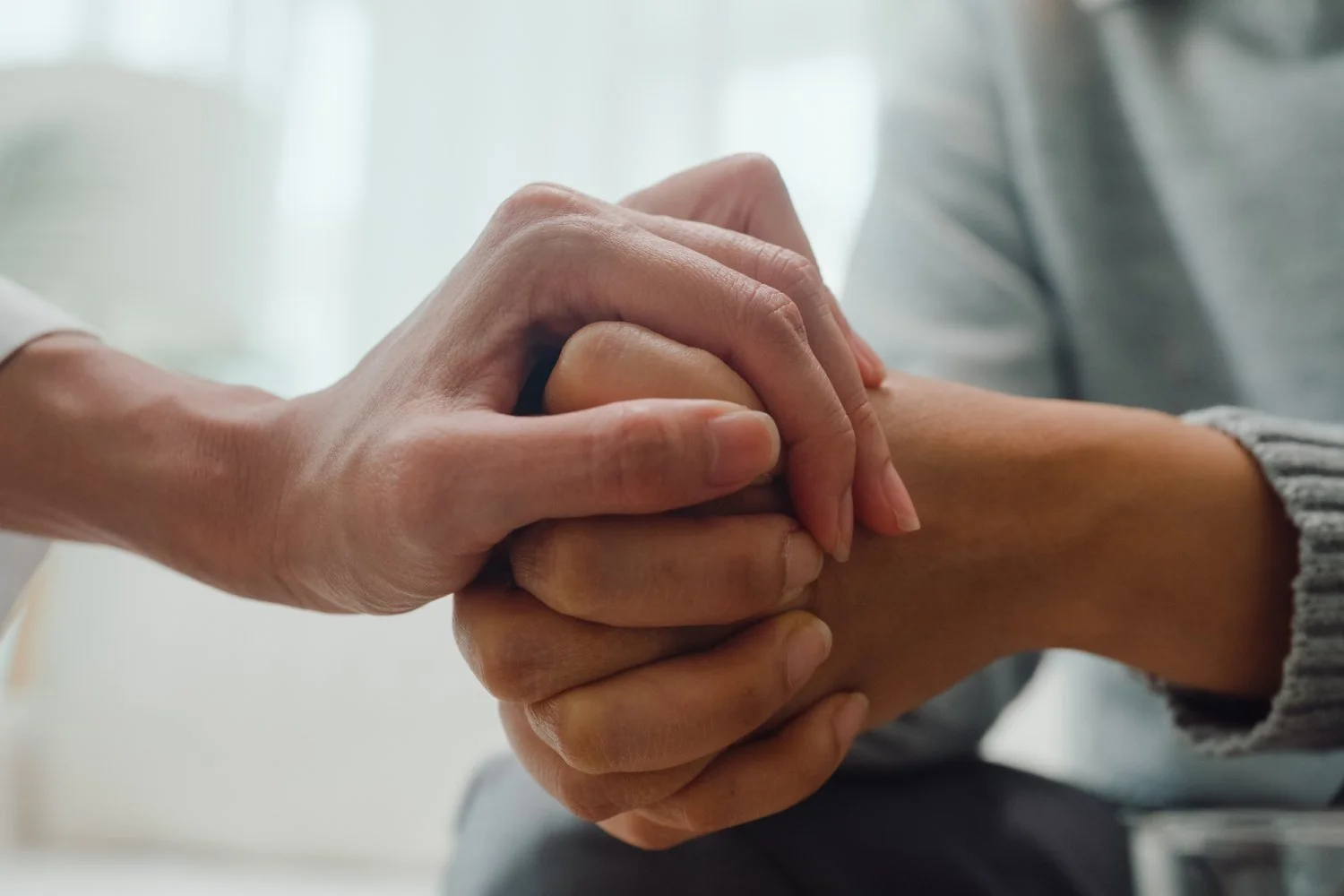
If someone shares that they're dealing with trauma or PTSD, the most helpful thing you can do is listen. Resist the urge to offer solutions, compare experiences, or reassure them that things will be fine. Being present without judgment is often more valuable than advice.
If you have a hard time holding space for someone who’s experienced trauma or hearing the details, let them know what your boundaries are and how you feel comfortable supporting them. That could be, “hearing the details makes me feel uncomfortable, but maybe you could tell me how you’re feeling.”
💙 Explore Calm’s session on Listening from the Relationship with Others series.

5. Advocate in your community
If you don’t know anyone personally, you can still advocate for those in your community. Contact your local representatives about mental health funding. Support organizations that provide trauma-informed care.
Encourage workplaces, schools, and healthcare settings to adopt trauma-informed approaches. Advocacy doesn't have to be loud to be effective. And taking one step forward with purpose can still affect meaningful change.
6. Support a relevant organization
Donating to, volunteering with, or simply amplifying organizations working on PTSD research, survivor support, or public education is a tangible way to contribute.
The National Center for PTSD, the Headstrong Project (which serves veterans), and local community mental health centers are worth looking into.
7. Participate in awareness events
Many organizations host events throughout the month of June, from virtual panels and webinars to community walks and fundraisers. These are great opportunities to learn more, connect with others, and show visible solidarity. Check local mental health organizations and veteran support groups for what's happening near you.
8. Talk about it openly
Normalizing conversations about trauma and mental health is something every person can contribute to. You don't need a story of your own to talk about PTSD. Mentioning the awareness month to a friend, bringing it up at work, or simply refusing to make a joke that minimizes trauma all count.
💙 Practice Kind Communication during this Daily Calm session led by Tamara Levitt.

How to support yourself when dealing with PTSD
If you're living with trauma, PTSD Awareness Month is a reminder that what you're experiencing is real, it's not your fault, and that help exists.
Self-care when you have PTSD isn't about bubble baths and positive thinking. It's about finding sustainable ways to regulate your nervous system, build safety, and stay connected. Here are some grounded approaches:
Seek professional support: Evidence-based treatments like Cognitive Processing Therapy, Prolonged Exposure, and EMDR have helped many people recover from PTSD. If you haven't already connected with a trauma-informed therapist, this month is a good time to take that step. SAMHSA's helpline (1-800-662-4357) can help you find local resources.
Focus on nervous system regulation: PTSD involves the nervous system in a very physical way. Grounding techniques, slow diaphragmatic breathing, and gentle movement can all help bring the body back to a felt sense of safety in difficult moments. A simple practice: when you notice yourself feeling activated, place both feet flat on the floor, take a slow breath in for four counts, and out for six. Do this three or four times.
Try mindfulness (with care): Mindfulness-based approaches have a growing body of research behind them as a supportive tool for people with PTSD. That said, some forms of meditation can feel overwhelming if you're not ready for them. Starting with short, guided sessions, or body-scan practices that anchor attention to safe physical sensations, tends to work better than open awareness practices.
Stay connected to people you trust: Isolation is one of PTSD's most powerful pulls. At the same time, connection is one of the most protective factors for recovery. That doesn't mean you need to open up to everyone, but find even one or two people you feel safe around and show up for those relationships as you're able.
Set realistic expectations: Recovery from PTSD is rarely linear. There are better days and harder days, and both are part of the process. Being gentle with yourself when things feel harder, rather than reading setbacks as failure, isn’t easy but it's important.
If you're in crisis or need immediate support, you can call or text the 988 Suicide and Crisis Lifeline by dialing 988. Help is available 24/7.

PTSD Awareness Month FAQs
When is national PTSD awareness day?
National PTSD Awareness Day falls on June 27th each year, as part of PTSD Awareness Month in June. The National Center for PTSD also marks June 27th as PTSD Screening Day, encouraging anyone who may be experiencing symptoms to take a short self-screen as a first step toward getting help.
How can I participate in PTSD Awareness Month?
There are plenty of ways to get involved, whatever your schedule looks like. You can share accurate information on social media, check in with people in your life, donate to or volunteer with mental health organizations, attend awareness events, or simply have more open conversations about trauma and mental health.
How do I raise PTSD awareness in my community?
To raise PTSD awareness, start with the people around you. Talk about it with friends, family, or coworkers. Suggest that your workplace mark PTSD Awareness Month with a lunch-and-learn or a shared resource. Connect with local veteran support groups, community mental health centers, or advocacy groups to find events or campaigns you can help spread the word about.
Is PTSD only experienced by veterans?
No. While PTSD is often associated with military service, it can affect anyone who has been through or witnessed a traumatic event. This includes survivors of sexual or physical violence, accidents, natural disasters, childhood abuse, sudden loss, and other deeply distressing experiences.
Women are nearly twice as likely as men to develop PTSD. Children can develop it too, though their symptoms may look different from those in adults.
What should I say to someone with PTSD?
The most helpful thing to do for someone with PTSD is to lead with listening rather than advice. Let the person know you're there, that you believe them, and that you won't push them to share more than they're comfortable with.
Avoid minimizing their experience with phrases like “Everyone goes through hard things” or offering unsolicited solutions. Ask open questions, follow their lead, and simply being present without judgment goes a long way. If you're unsure what they need, it's okay to ask: ‘Is there anything specific that would feel helpful right now?”
Calm your mind. Change your life.
Mental health is hard. Getting support doesn't have to be. The Calm app puts the tools to feel better in your back pocket, with personalized content to manage stress and anxiety, get better sleep, and feel more present in your life.

Images: Getty