
Do you have a fear of heights? 7 ways to cope with acrophobia

Clinically reviewed by Dr. Chris Mosunic, PhD, RD, MBA
Having a fear of heights doesn’t have to control your life. Discover the symptoms and causes of acrophobia and 7 mindful steps to relax your body and feel grounded in high spaces.
You’re standing on a perfectly solid balcony with a steady rail surrounding you, but you’re gripping the side so tightly, your fingers start to ache. The drop below you isn’t even that far, yet your stomach still flips and your attention locks onto the space beneath you. Your pulse might quicken, your heart could race, and you may even feel dizzy or nauseous. That sudden surge of emotion you’re feeling is acrophobia, or fear of heights, and it can show up in moments that seem ordinary and perfectly safe to everyone else.
Many people assume this fear of heights only happens in extreme situations, like on mountaintops, rooftop edges, or unsettling glass walkways. But acrophobia often interrupts everyday routines in smaller, less obvious ways. Riding a tall escalator, climbing a second-floor ladder, or even glancing over a stairwell can be enough to set off the alarm in your mind and body.
Acrophobia is shaped by your nervous system, your past experiences, and the way your body processes height and space. Let’s explore what acrophobia is, why it develops, and how mindfulness and gradual exposure can help you feel steadier and more grounded when you’re deep in fear.

What is a fear of heights (acrophobia)?
A fear of heights, known as acrophobia, is an intense fear response triggered by being in high places or even imagining them. Instead of mild discomfort, your body can shift into a heightened state of alertness that affects both your thoughts and your sense of balance, making it harder to judge distance or stability.
Acrophobia is a specific phobia focused on height-related situations, such as crossing a bridge, standing near a tall window, or climbing a ladder. The fear can become strong enough to lead to avoidance, which may interfere with daily routines, travel, or work.
This fear isn’t an overreaction. It reflects how your brain and body interpret safety in moments that feel unpredictable.
What are the types of acrophobia?
Acrophobia isn’t one single experience. It shows up in a few patterns, and recognizing your type can make coping feel more straightforward.
Perceptual acrophobia happens when heights distort your sense of balance or depth, making stable surfaces feel unsteady.
Situational acrophobia appears only in specific places, like bridges, high walkways, ladders, or tall staircases.
Learned acrophobia comes from past experiences—such as a fall or a frightening moment—that taught your brain to associate heights with danger.
Vestibular-related acrophobia involves a sensitive balance system, where the inner ear reacts strongly at heights and creates a wobbly or disorienting feeling.
Most people experience a mix of these rather than just one.

What are the symptoms of having a fear of heights?
The symptoms of a fear of heights can show up fast, sometimes before you fully register what triggered them. You might step onto a balcony, glance down a stairwell, or climb a couple of rungs on a ladder, and your body reacts as if you’re in a much more dangerous situation than you are. That intensity can feel confusing, especially when the height itself is fairly mild.
Common symptoms include a racing heartbeat that makes it hard to think clearly, shortness of breath or the sense you can’t get a full inhale, shaky or tense legs that make you feel less steady, or sweaty palms or damp skin as your stress response kicks in. You might also experience lightheadedness or dizziness linked to balance and visual changes and nausea, especially if the height feels disorienting. Tunnel vision that locks your focus on the perceived danger, or often a strong urge to retreat, even from completely safe places
These reactions come from your nervous system’s instinct to protect you. When your brain senses a possible drop—real or imagined—it prepares your body to move away immediately. That instinct is useful in true danger, but with acrophobia it switches on too strongly and too quickly. It can also leave you feeling embarrassed or unsettled afterward, wondering why your reaction was so intense.

Why do some people develop a fear of heights?
A fear of heights can seem sudden, but it usually develops from a mix of biology, past experiences, and how your nervous system processes height and space. Most people don’t choose this fear or see it forming. It builds gradually and shows up the moment you’re near an edge or looking down from somewhere that feels too high.
Your brain’s safety wiring: Humans are naturally cautious around heights, but some people have a more sensitive alert system. The brain misreads a safe situation as risky and pushes the alarm before you can think it through.
Genetics and temperament: If anxiety runs in your family, your nervous system may react more strongly to certain situations, including heights.
Past experiences: A fall, a slip, or watching someone else panic can leave a strong imprint. Your brain uses those memories as “evidence” the next time you’re somewhere high, even if you barely remember the original event.
Balance and visual sensitivity: Your inner ear and eyes work together to keep you steady. If either one is extra sensitive, heights can feel distorted or unstable, which naturally increases fear.
Chronic stress:Long-term stress can make your whole system more reactive, so height-related anxiety feels sharper and harder to manage.

How to cope with a fear of heights: 7 ways to use mindfulness to ease the panic
Mindfulness may help with a fear of heights by slowing your body’s alarm system and giving your brain a chance to understand what’s actually happening. These seven approaches are designed to be easy to use whether you’re on a balcony, on a ladder, or just thinking about a high place that makes your stomach flip.
1. Notice your feet
When your attention shoots toward the edge or a drop, you can lose the sense that you’re standing on solid ground. Bringing your focus to your feet helps your body remember that you’re supported. You might quietly notice the pressure beneath your shoes or shift your weight from heel to toe.
If you’re seated—say, on a ferris wheel or in an airplane—pressing your feet gently into the floor or footrest can give your body the same reminder. It’s a small move, but it immediately steadies your balance system and helps you feel more at ease.
💙 Explore how Grounding can help you during times of stress in this guided meditation on the Calm app.
2. Practice slow exhales
During height-related anxiety, most people try to breathe “in” more deeply, but the exhale is actually what turns down the body’s alarm signals.
Try breathing out long and slow, almost like you’re fogging a window, and let the inhale happen naturally afterward. Even a single slow exhale can release chest tension and help your heartbeat settle.
Related read: Breathing for stress: 7 calming techniques that *actually* work
3. Ground your senses
When anxiety spikes, your world zooms in on whatever feels dangerous, and it becomes harder to register anything else around you. Grounding your senses widens that focus. You might look for a few steady objects in front of you, listen for familiar sounds, or touch something that feels solid, like a railing or the wall beside you.
Noticing the texture of a balcony rail, the hum of traffic below you, or even the pattern in the carpet can pull your attention out of panic mode and back into the present moment.

4. Relax the muscles in your legs
Height anxiety often makes your legs tense, which can trick your brain into thinking you’re less stable than you are. Gently softening your knees or wiggling your toes inside your shoes can release some of that tension and help you feel more balanced.
If you’re halfway up a ladder and freeze, pausing to bend your knees slightly before climbing down can give you a sense of control again. That small release signals safety to your nervous system and interrupts the feeling that your body is about to lose control.
5. Use micro-exposure
Exposure to your triggers doesn’t have to be dramatic or overwhelming. In fact, the most effective approach is slow and simple. Micro-exposure means choosing height situations that feel slightly uncomfortable (and not terrifying) and staying just long enough to feel the wave of anxiety rise and fall.
You might stand on a step stool for a short moment, look out a second-floor window while keeping a hand on the wall, or walk halfway up a stadium staircase before pausing. These small, controlled experiences teach your brain that your body can handle more than it thinks, and the fear gradually loosens its grip.
💙 Learn how to Distance Yourself from Anxious Thoughts with guidance from the Calm app.
6. Name what’s happening
Putting your experience into a few calm, neutral words can interrupt spiraling thoughts. You might quietly say, “My body is reacting,” or “This feels intense, but I’m safe,” or “My legs are shaky because I’m anxious, not because I’m in danger.”
On a tall escalator or in a glass elevator, this simple naming can help you stay connected to what’s real rather than what your fear predicts. It doesn’t make the anxiety disappear, but it creates just enough space for your rational mind to rejoin the moment.
Related read: How to *actually* feel your feelings: a guide to processing your emotions
7. Shift your gaze to the horizon
Looking straight down exaggerates the sense of height and can make the drop feel deeper than it is. Shifting your gaze forward or slightly above eye level helps your balance system reset.
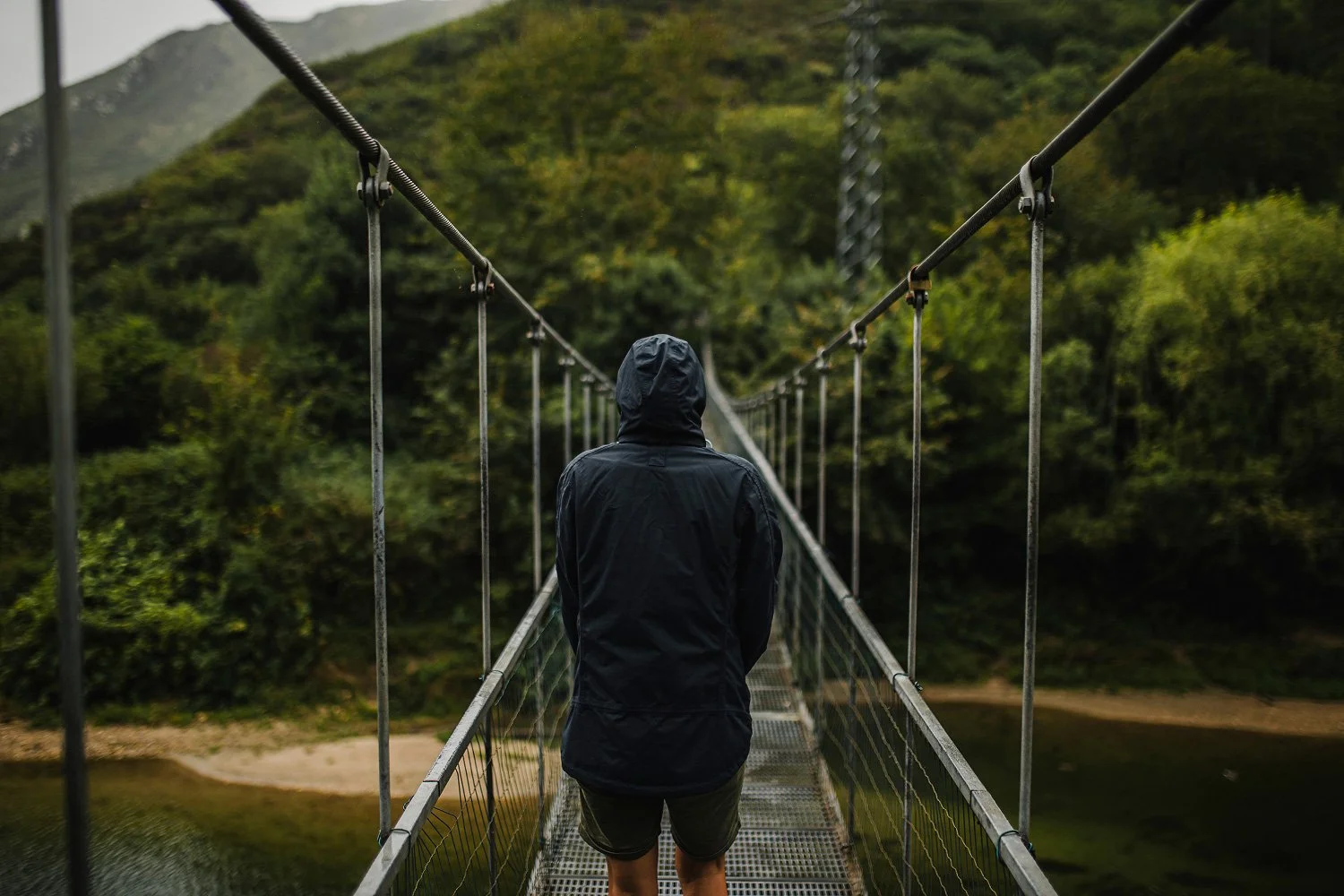
If you’re crossing a high pedestrian bridge, focusing on the walkway ahead rather than the view below can make the whole experience feel steadier. Even glancing at a fixed object—like a wall, a tree, or the opposite side of a building—helps your nervous system orient itself again.
What are the most common phobias?

Curious to learn more about other phobias and how to treat them? Having a deeper understanding of common phobias, like agoraphobia or acrophobia, can help you get to know yourself better and give you tools for treating them or easing their symptoms.

Fear of heights FAQs
Can you treat a fear of heights?
Yes. A fear of heights is very treatable, and many people improve with the right support. Therapy—especially cognitive behavioral therapy (CBT) and exposure therapy—helps you understand your fear and gradually retrain your nervous system. Some therapists also use virtual reality when real-life exposure feels too overwhelming.
Treatment won’t remove your natural caution around heights, but it can reduce the fear to a level where you feel steadier and more capable in situations that once felt difficult.
What causes a fear of heights?
Acrophobia usually develops from a mix of genetics, past experiences, and the way your body processes balance and visual information. Some people have more sensitive nervous systems that react strongly when they’re near an edge or looking down from a height.
Others develop the fear after a fall, a close call, or watching someone else panic. Height-related dizziness or instability can also intensify the fear, since the body reads that wobbliness as danger. There’s rarely one single cause — it’s usually a blend of physical, emotional, and environmental factors.
Can you prevent a fear of heights?
There’s no guaranteed way to prevent acrophobia, but early, gentle exposure to safe height situations can help. Children who regularly explore playground structures or look out from low balconies often develop a more relaxed relationship with heights.
For adults, staying engaged with low-stakes situations—like using a stepladder or crossing a pedestrian bridge—can keep the nervous system from becoming overly reactive. Prevention is mostly about familiarity, not force.
What is the #1 phobia?
Surveys vary, but fear of spiders (arachnophobia) and fear of heights (acrophobia) often appear near the top. Both tap into deep biological instincts and can trigger strong physical reactions. Phobias in general are common, and many people live with more than one without noticing until a specific situation brings it out.
Can mindfulness really help with a fear of heights?
Mindfulness helps by pulling your attention away from imagined danger and back into your body and the present moment.
Height-related anxiety often builds through spiraling thoughts and physical sensations that make you feel unsteady, and mindfulness techniques—like grounding, slow breathing, and sensory focus—interrupt that cycle. While it isn’t a standalone cure, it works well alongside gradual exposure and can make sudden spikes of fear much easier to manage.
How long does it take to overcome a fear of heights?
There’s no set timeline. Some people notice small improvements after a few weeks of gentle exposure and grounding techniques, while others need several months, especially if the fear has been around for years. Progress depends on how often you practice, how strong the fear is, and whether you’re working with a therapist. The most important part is taking small steps at a pace your nervous system can handle rather than pushing yourself into panic.
Is a fear of heights genetic?
Genetics can influence how sensitive your nervous system is to potential threats, which may make you more likely to develop a phobia like acrophobia. It doesn’t mean the fear is guaranteed, just that your stress response or alert system might be more reactive. Your environment, experiences, and overall stress levels shape the rest.
When should you seek professional help for acrophobia?
It’s worth reaching out for support if your fear of heights starts getting in the way of daily life — avoiding certain jobs, skipping travel, or feeling panicky in routine situations like escalators or stairwells. You don’t need to wait until it becomes unmanageable.
A therapist can help you understand what’s driving the fear and guide you through exposure in a safe, steady way. Even a few sessions can make height-related situations feel far less overwhelming.
Calm your mind. Change your life.
Mental health is hard. Getting support doesn't have to be. The Calm app puts the tools to feel better in your back pocket, with personalized content to manage stress and anxiety, get better sleep, and feel more present in your life.

Images: Getty